Tickets, Parking and Toll Roads: Do They Show Up in Your Credit History?
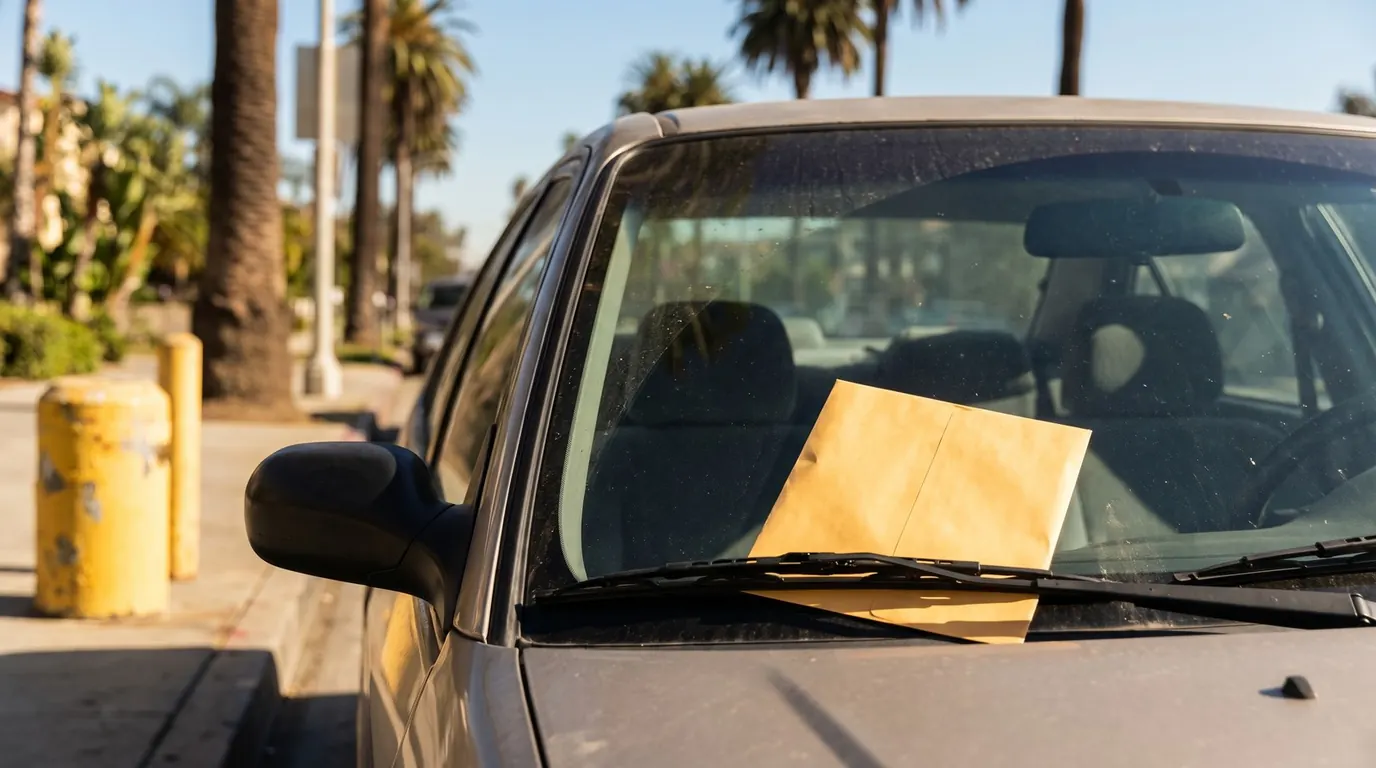
A ticket under your windshield wiper, an envelope from FasTrak, a letter from a traffic camera. Paying is no fun, and many people put it off. Let’s sort out which of these a credit bureau actually sees, and which ones hit you from a completely different direction: through the DMV and amounts that keep growing.
Key points
- Parking tickets, camera tickets and unpaid tolls don’t go on your credit report. The city, the court and the toll road operator don’t send this data to Experian, Equifax and TransUnion.
- Only a collection can show up on your report: if the debt was handed to a collection agency and the agency reported it to the bureaus. With city tickets, this is rare. With debts to private companies, it happens more often.
- The main consequences of an unpaid ticket have nothing to do with your credit history. They are a block on renewing your car registration at the DMV (DMV hold), a growing amount that nearly doubles in many cities, and the risk of your car being towed if you have five or more old tickets.
- In California, an unpaid toll gets more expensive in several steps: a bill based on your license plate, a notice with a penalty, a second notice, and then a registration hold or collectors.
- If a collection for a ticket does show up on your report, first check that it is accurate: the amount, the dates, the name of the original creditor and your personal information. At Excalibur Credit Solutions, we look at entries like this for free.
Why a ticket is not a loan
A credit report is the history of how you borrow money and pay it back. Credit cards, an auto loan, a mortgage, a phone on a payment plan. Every month the bank tells the bureau whether you pay on time, how much you owe and what your limit is. Your credit score is built from these lines.
A parking ticket, a letter from a camera or an unpaid toll is not a loan. You didn’t borrow anything. It’s a fee set by a city, a court or a toll road operator. These organizations don’t send data to the credit bureaus. They simply don’t have that channel: they are not creditors, and they never lent you anything.
So a ticket on its own won’t show up on your report, whether it’s paid or overdue. A bank reviewing your card application won’t see it. Your credit score doesn’t change because of it. In the reports people send to Excalibur Credit Solutions for review, we don’t see tickets as a separate line. We only see a collection, if the debt went to an agency.
When a ticket can still end up on your report
There is only one way: through collectors. If a ticket stays unpaid for a long time, the city or the toll operator can hand the debt over to a collection agency. Then it’s up to the agency whether to report it to the bureaus. If it does, a collection appears on your report: a separate negative entry with the agency’s name and the amount.
In practice, this rarely happens with city tickets. Since around 2016, the three bureaus haven’t accepted debts that didn’t come from a loan or a payment agreement. That means tickets, penalties and municipal fees. And since 2017–2018, the bureaus have also tried not to accept entries without enough personal information (name, address, SSN or date of birth). That’s why collectors working on city tickets are more likely to call and send letters than to damage your credit history.
Debts to private companies are a different story. A private parking lot at a shopping mall, a rental car company whose toll you didn’t pay, and in some states the toll operator itself. Here the debt looks more like a regular one, and collections for it do show up on reports. To see what an entry like this looks like and how it differs from a charge-off, read our article about the difference between a charge-off and a collection.
What you actually risk: a table by type of ticket
While you worry about your credit report, the real consequences come from a different direction. We put them all in one table.
| Type of ticket | On your credit report? | What you actually risk |
|---|---|---|
| Parking (city) | No. A collection is rare | The amount goes up after 21 days, a DMV hold on your registration, towing with 5+ tickets |
| Parking (private lot) | A collection is possible | Letters from an agency, an entry on your report for up to 7 years |
| Camera: red light | No | A point on your driving record, higher insurance; if unpaid, the debt goes through the court |
| Camera: speed (pilot programs) | No | A civil fine with no points on your driving record; if unpaid, a penalty |
| Unpaid toll (FasTrak) | No. A collection is rare | A penalty for every trip, a second notice, a DMV hold or collectors |
| Toll in a rental car | A collection from the rental company is possible | A processing fee, a charge to your card, a debt to the rental company |
| Speeding (from an officer) | No | A point on your driving record, higher insurance; if unpaid, court and a risk of problems with your license |
Parking tickets: how the amount grows and when the DMV steps in
The path of an unpaid parking ticket in California
- Day 0A ticket under your windshield wiper. It shows the amount and the payment deadline.
- Day 21The deadline has passed. A penalty is added, and in many cities the amount nearly doubles.
- A few weeks laterA late notice arrives at the address where the car is registered. If you miss that one too, the amount keeps growing.
- After thatThe ticket is sent to the DMV: a hold on your registration renewal, plus a separate fee for it.
- Several ticketsWith five or more unpaid tickets older than 21 days, your car can be towed.
A DMV hold (a block on your registration) is the city’s main leverage. Until the tickets and penalties are paid, you can’t renew your registration. Driving with expired registration (people call it expired tags) means a new ticket and a reason to get pulled over. This is exactly how many people find out about an old ticket: it’s time to renew the registration, and the bill includes a mystery amount from last year.
An important detail: notices go to the address where the car is registered with the DMV. If you moved and didn’t update your address, you won’t see the letters, and the amount will keep growing without you knowing. Mail forwarding is only temporary, and some official letters aren’t covered by it.
Toll roads and FasTrak: how a $7 toll turns into hundreds
In California, toll booths with cashiers have almost disappeared. A camera captures your license plate, and the bill comes by mail, again to the registration address. FasTrak is the state’s electronic payment system for toll roads and bridges. If your car has no transponder (a small device on the windshield that pays the toll for you) and no FasTrak account, the operator finds you by your plate. From there, everything depends on whether you saw the letter, and when.
How an unpaid toll grows
The danger is that it’s usually not just one trip. A week of driving in the toll express lanes (ExpressLanes) without a transponder adds up to ten trips, and the penalty is multiplied by ten. Rough amounts: on the state’s seven Bay Area bridges, the first notice adds $5 per trip, and the second adds $15. On the Golden Gate Bridge, the penalty is already $25 for the first notice and more for the second. Check the exact numbers on your own notice: operators change them.
A rental car is a separate story. The rental company pays the toll and then charges it to your card, along with its own processing fee. If the card is already closed or the charge didn’t go through, you still owe the rental company. And that’s a private business, so collections on its debts end up on credit reports noticeably more often than city ones.
What to do today so a ticket doesn’t become a problem
Seven driver habits that protect your money and your report
- Pay a ticket by the deadline printed on it (usually 21 days in California), before a penalty is added
- After a move, update your address with the DMV, not just your mail forwarding
- Once a month, check the toll operator’s website for unpaid tolls on your license plate
- Open a FasTrak account if you use toll lanes even once in a while
- In a rental car, ask ahead of time how tolls are paid
- When you sell a car, report the transfer to the DMV right away, or the new owner’s tickets will come to you
- Keep three-bureau monitoring on, so a collection doesn’t catch you by surprise right before an application
The monitoring habit isn’t overkill. A collection for a private parking lot or a rental car can show up a year later, when you’ve already forgotten all about it. The credit monitoring services SmartCredit, IdentityIQ and MyScoreIQ show reports from all three bureaus at once and send you an alert when a new entry appears. To find out how to get this kind of report, see our guide how to get a three-bureau report.
Landlords look at collections too, and they don’t care whether it’s for a card or for parking. We covered what exactly a landlord sees in our article on credit history and renting an apartment.
A collection for a ticket is already on your report: what to check first
The first urge is to pay right away so the entry disappears. It doesn’t work that way: a paid collection stays on your report, just with a “paid” status. Read more in our article “Paying a Collection Won’t Save Your Credit History”. That’s why you check the entry first and only then decide what to do with it.
- Whose debt is it? The ticket may have been issued for a car you sold long ago, or similar license plates may have been mixed up. The original creditor listed in the entry shows where the debt came from.
- The amount. Collectors sometimes list an amount with penalties that weren’t on the original notice, or a different amount at different bureaus.
- The dates. A wrong date of first delinquency shifts how long the entry will stay visible on your report.
- Duplicates. The same ticket from two agencies: the debt was resold, but the old entry was never removed.
- Personal information. An old address, a typo in your name, a date of birth that isn’t yours: all reasons to doubt the entry is even yours.
Excalibur Credit Solutions managers start by checking an entry like this at all three bureaus and against your documents. Inaccurate, outdated and unverified entries are disputed by the specialists on our technical team. You could do it yourself, but we spare you the hours and handle every step ourselves. If the entry is accurate, we’ll tell you so honestly and explain how it will affect your next application. Why your score dropped right now is often clear from a single new line; that’s what our article why your credit score dropped is about.
Frequently asked questions
Does an unpaid parking ticket affect your credit score?
The ticket itself doesn’t: the city doesn’t report it to the credit bureaus, and it doesn’t appear on your report. Your score can only take a hit if the debt went to collectors and the agency reported it to the bureaus. With city tickets, that’s rare. With private parking lots, it happens.
Does a FasTrak debt go on your credit history?
Not by itself. An unpaid toll first piles up penalties, then blocks your registration renewal at the DMV. The debt goes to collectors only at the later stages, and an entry doesn’t always appear on the report. The only way to check is to look at your three-bureau report.
Does a speeding ticket show up on your credit report?
No. It shows up on your driving record and affects the cost of your insurance, but not your credit score. It could only get onto your report as a collection, and even that is rare.
I paid a ticket late. Will it hurt my credit history?
No. Paying a ticket late is not the same as a late payment on a loan, and the bureaus won’t find out about it. You’ll pay the penalty, and that’s the end of it. What hurts your credit history is late payments on loans and cards, and collections.
Can I get a ticket for a car I already sold?
Yes, if the sale wasn’t reported to the DMV. Letters about tickets and tolls go to whoever is listed as the owner, which means you. That’s why you report the transfer to the DMV right after the sale. If a collection shows up on your report for a car you no longer own, that’s a reason to send your three-bureau report for a free review.
Does a bank check your tickets when it reviews a loan application?
The bank looks at your credit report, your income and your current debts. Parking tickets and tolls aren’t on your report, so the bank doesn’t see them directly. The exception is a collection on a debt like this: the bank will see it like any other negative entry.

We’ll find out whose ticket it is and whether the entry is accurate
If a collection for parking, a toll road or a rental car shows up on your report, Excalibur Credit Solutions will check the entry at all three bureaus for free: the creditor, the amount, the dates and your personal information. Our technical team disputes inaccurate, outdated and unverified entries, and for accurate ones, we’ll explain how they will affect your next application. Each case is different and results vary, with no hidden fees.
or leave a request below — we reply within 24 hours during business hoursRead next
 Credit Report & Negative ItemsPaying a Collection Won’t Save Your Credit History: Should You Pay, and What Really HappensOctober 8, 2026 · 8 min read
 Credit Report & Negative ItemsCharge-Off vs. Collection: The Difference in Simple WordsOctober 7, 2026 · 8 min read
 Credit ScoreWhy Did My Credit Score Drop? 8 Common Reasons and What to DoOctober 23, 2026 · 8 min read
This material is for informational purposes only and is not legal or financial advice. Results vary. © 2026 Excalibur Credit Solutions Inc.